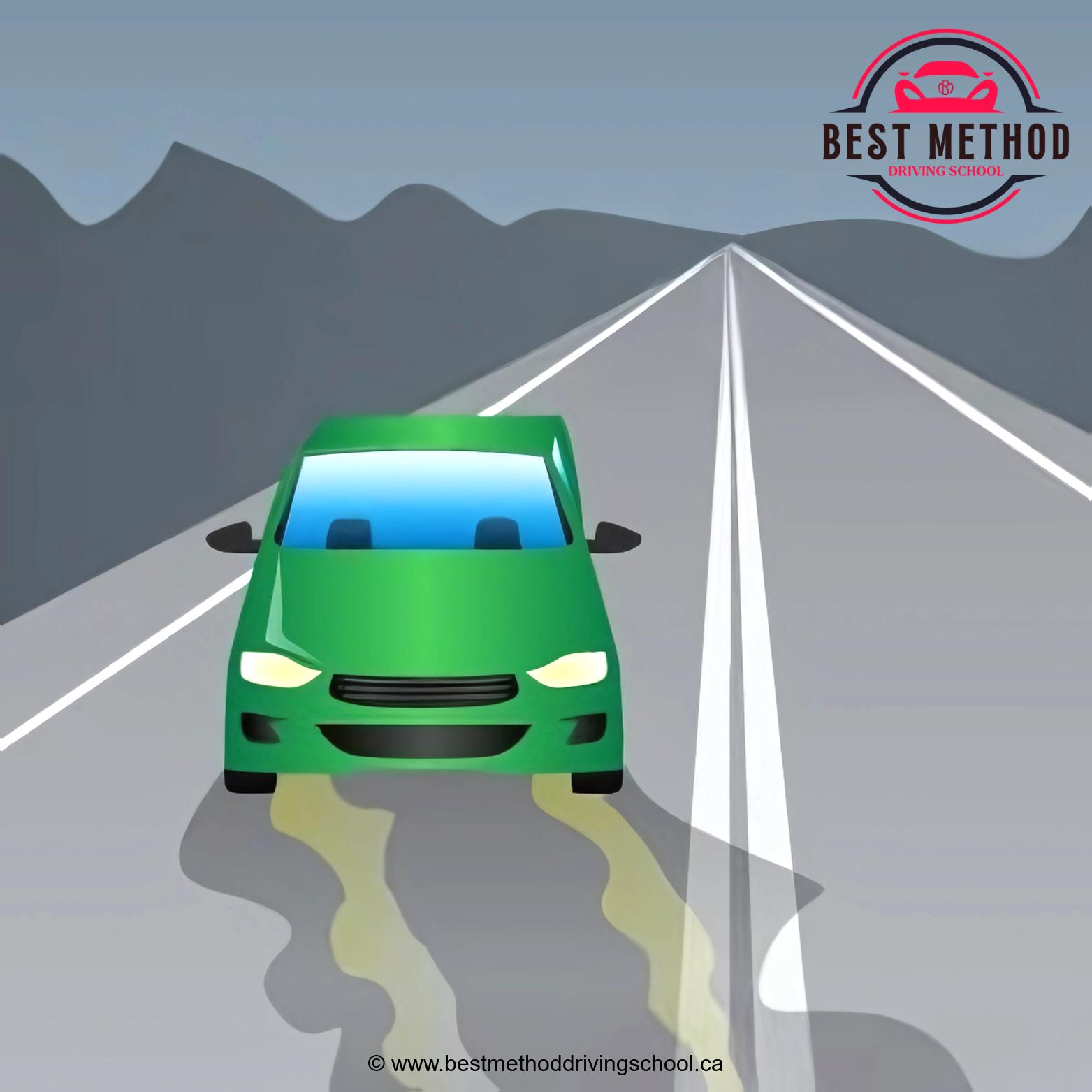
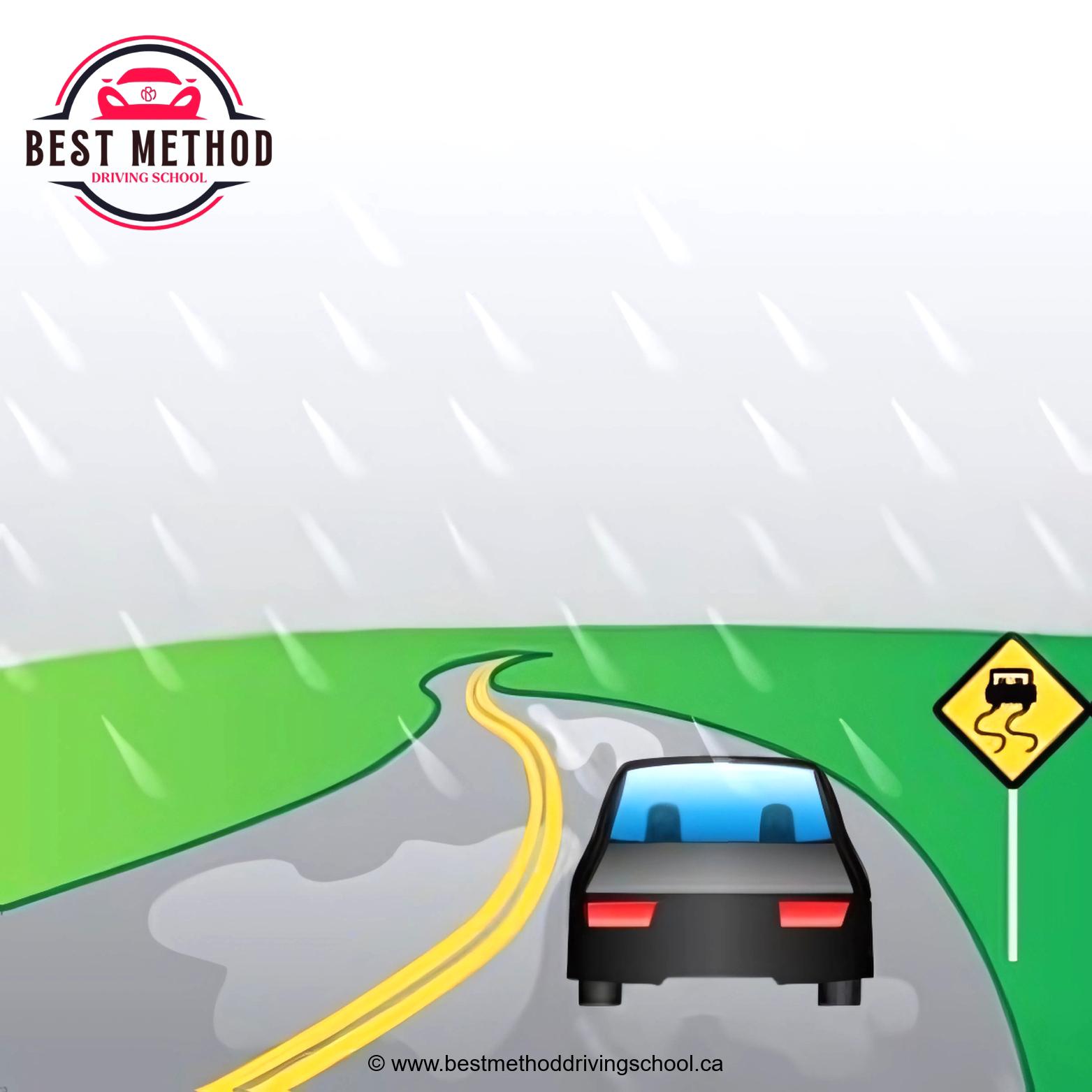
Driving on wet roadways requires extra caution. Water spray can reduce visibility, so drivers should have their full headlight system on, and use windshield wipers and windshield wiper fluid as needed. Wet roadways can also cause loss of traction and/or hydroplaning. If this occurs, drivers should ease off the gas pedal to reduce speed naturally while maintaining control of the vehicle.
What is the safest action for drivers to take when their vehicle drives over black ice?
Driving over black ice can be dangerous because it can result in uncontrolled skidding if handled improperly. The safest course of action is to ease off the accelerator, maintain control of the vehicle, and steer in the desired direction. Drivers should avoid panic and should avoid hard braking. Drivers must not put their vehicle in neutral, because they will no longer have proper control of the vehicle.
A flashing blue light mounted on a motor vehicle indicates:
Flashing lights on vehicles often indicate the purpose of the vehicle, and are useful to help drivers make appropriate decisions when these vehicles approach. For example, snow removal equipment, bearing a flashing blue light, takes up a full lane on the road and often moves much slower than other traffic. In many cases, drivers will choose to pass these vehicles when safe to do so, but during episodes of heavy snowfall it can be wiser to remain behind them and drive on the roadway they have cleared.
How much insurance coverage is provided to an uninsured driver?
By law in Ontario, all drivers are required to have insurance coverage for their vehicle. Proof of insurance coverage is required to register vehicles, and for drivers to renew their vehicle plate permits. Drivers who drive illegally without insurance coverage have no financial recourse if an accident occurs, and will be held personally liable for all costs incurred. Uninsured drivers also risk the possibility of civil lawsuits which could lead to their personal bankruptcy. All drivers must obtain insurance coverage before driving. If borrowing a vehicle, drivers should be certain that they are covered under the owner’s insurance.
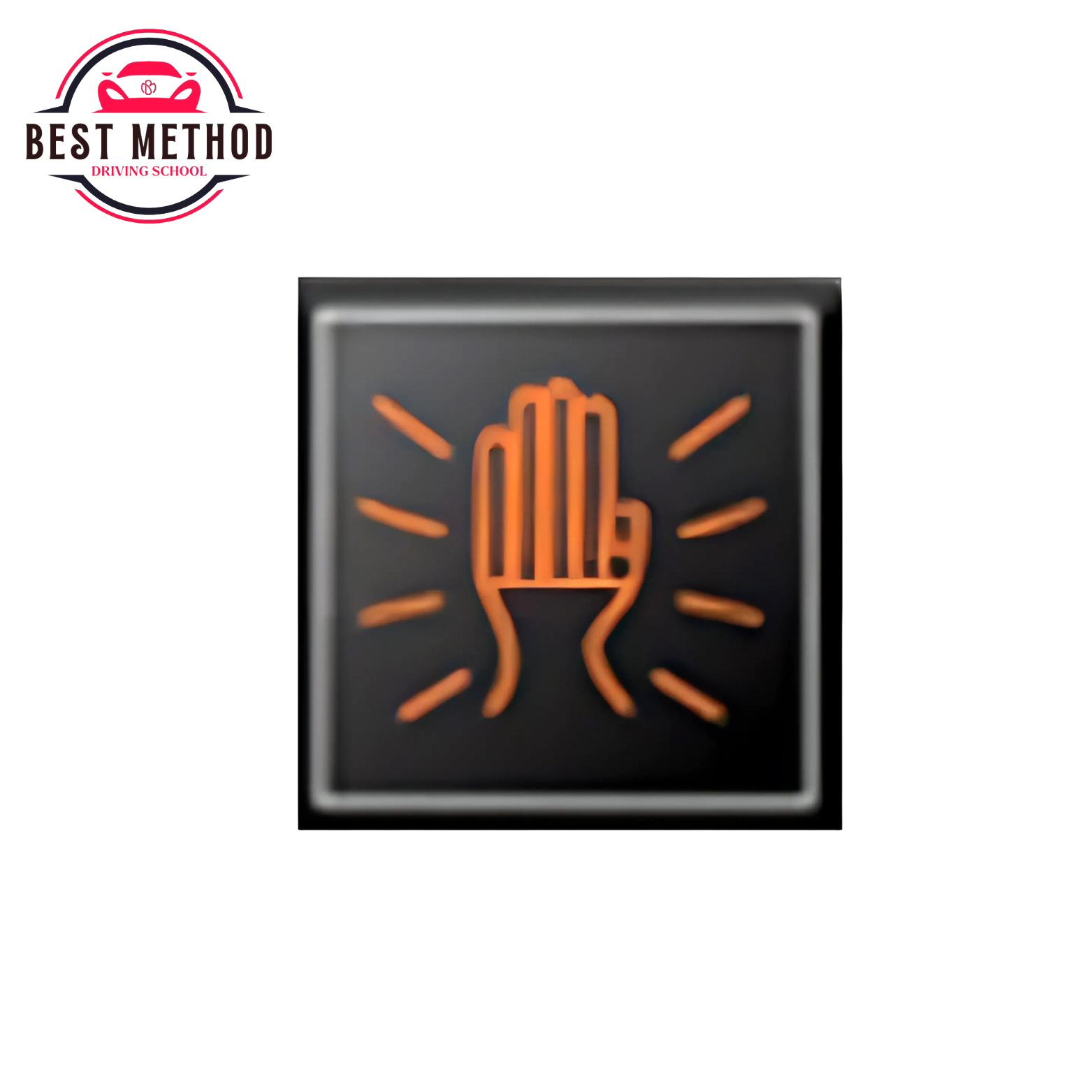
Pedestrians facing a flashing or steady red hand symbol should:
Pedestrians should always obey crossing signals. Unfortunately, pedestrians sometimes cross when and where they shouldn't. Drivers must yield right-of-way to pedestrians, even when pedestrians are 'in the wrong'.
When a police officer motions them to go through an intersection where the light is red, what should drivers do?
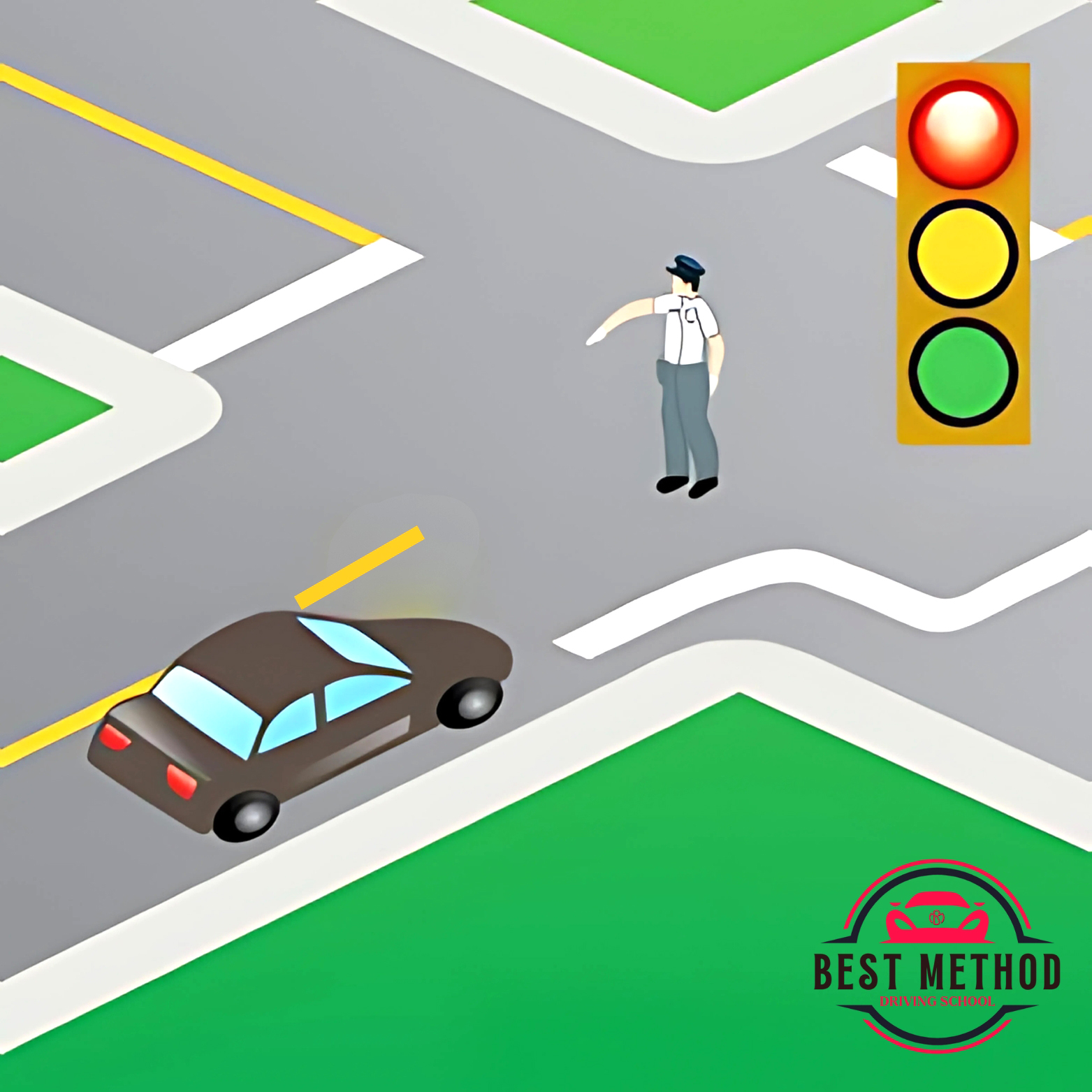
Drivers must obey police officers? signals. Police officers working intersections are usually present to direct traffic due to malfunctioning lights, construction, or an accident. Drivers should not stop in the middle of an intersection to speak to police officers. If drivers have questions about something that is occurring on the road, their safest option is to listen to a local news station. Failing to obey the directions of a police office will result in 3 demerit points.
When involved in a reportable accident, drivers must report this to their nearest provincial or municipal police...
Drivers must immediately report accidents when an injury is involved or damage to vehicles or property over $2000. Failing to do so and providing required information to the police may result in a fine of $200 to $1,000, 3 demerit points, a possible jail term, and suspension of the driver's license. Drivers must remain at the collision scene: the penalty for leaving the scene is seven demerit points.
On multilane roadways, there is always the possibility that other vehicles are travelling in lanes to the right or left of the driver changing lanes. There is also the possibility that vehicles in other lanes are accelerating into the driver's blind spot. For these reasons, drivers must always use caution when changing lanes, ensuring they signal to inform other drivers of their intention, then check their rear view mirror and blind spots to ensure it is safe to change lanes.
The first time they reach 15 demerit points, fully-licensed G drivers will have their license:
At 15 demerit points, G drivers? licenses will be suspended for 30 days from the date they hand over their license to MTO. Drivers can lose their license for up to two years if they fail to surrender it. After the suspension, the number of points on their driver's record will be reduced to seven. At this stage, any further points could result in an interview, and if drivers reach 15 demerit points again, they will have their license suspended for 6 months. The demerit points system works differently for drivers with a G1 or G2 license. For more information on demerit points, please select the following link: http://www.mto.gov.on.ca/english/dandv/driver/handbook/section4.6.0.shtml
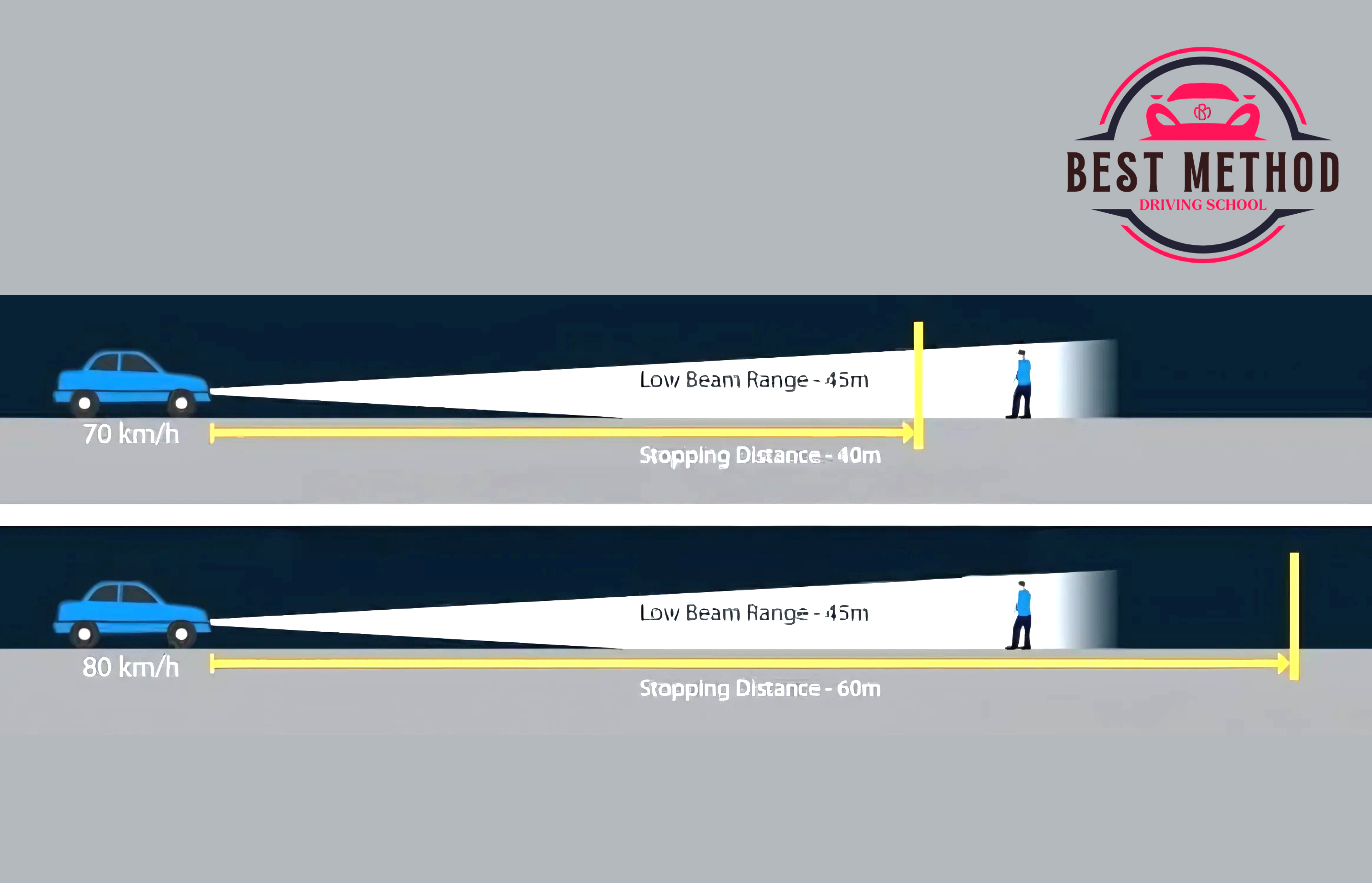
Overdriving the headlights is dangerous. Drivers who are travelling this fast will not see obstructions in the road in time to stop, and will most likely be involved in a collision as a result. Drivers are most likely to overdrive their headlights in conditions that limit visibility such as fog and heavy rain or snow. Drivers should always be certain to adjust their speed to the conditions of the road.
What should drivers do when driving on a highway near an exit ramp if there are continuity lines to the right of their lane?
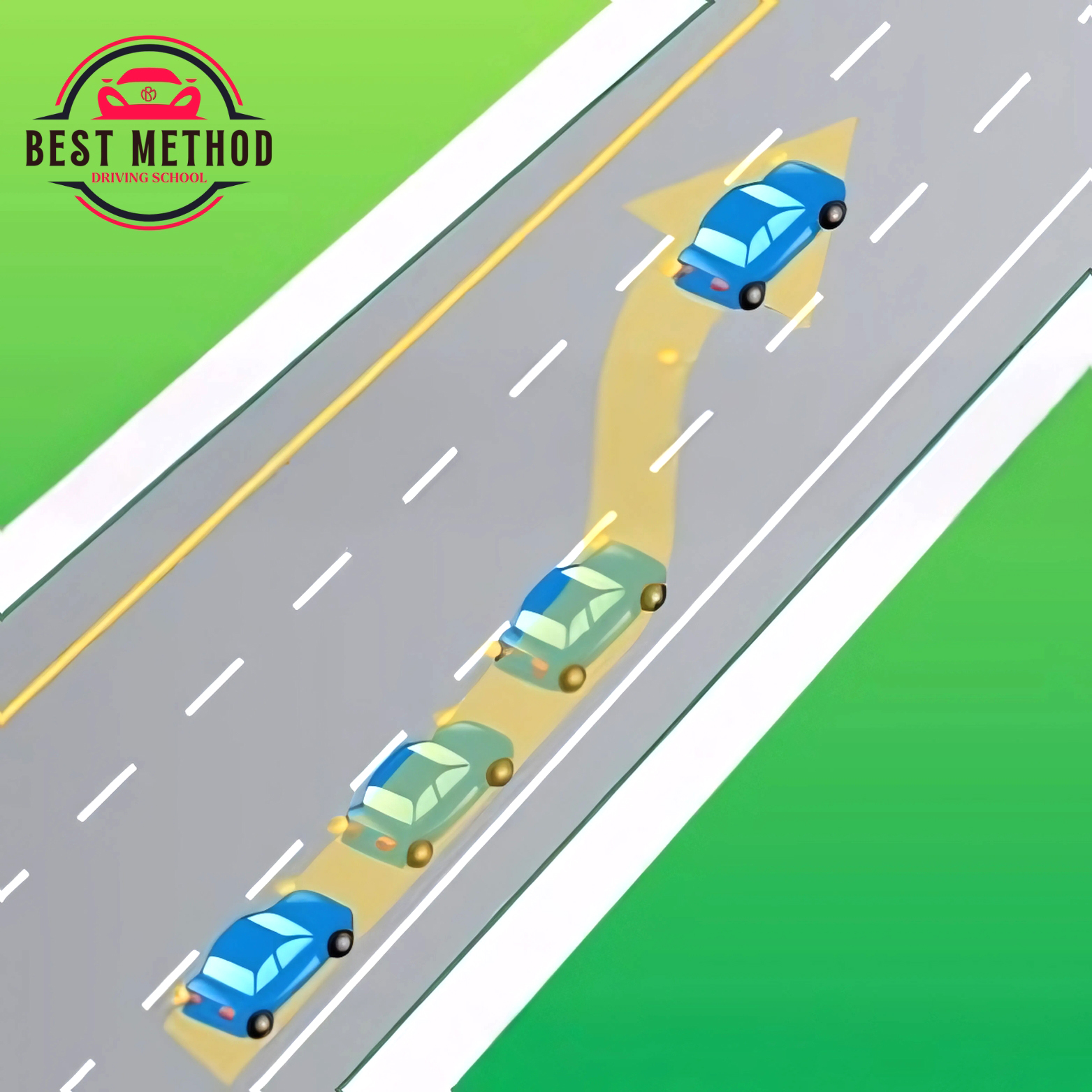
Multilane highways often have two lanes that can be used to exit the highway at off-ramps; this allows for more traffic to move off the highway at the same exit. The right-most lane is required to exit: there will be a solid line to the right of that lane. The second exit lane usually offers the option of exiting or continuing along the freeway: it will have broken lines (continuity lines) to its right. Drivers in this extra exit lane simply continue to drive along the highway if they do not wish to exit.
What is the consequence for the third or subsequent occurrence of a driver caught with a blood alcohol concentration in the ?warn range? of 0.05 to 0.08?
Drinking and driving is a serious and dangerous offense. It is always best not to drink if you need to drive, or to arrange alternate transportation if you have had any alcohol. Those who choose to continue to drive with their BAC in the ‘warn range’ even after prior warnings will face immediate and long-term consequences in an effort to ensure they properly understand the dangers of drinking and driving.
What documents may police officers require drivers to produce?
Drivers must always have their own valid license, as well as the pink insurance slip and ownership papers for the vehicle being driven. If drivers do not have the pink insurance slip, they can be fined up to $400.
If a traffic signal changes while a pedestrian is still on the street, who has the right-of-way?
Pedestrians must always be given the right-of-way, even if crossing illegally. It is never permissible to hit a pedestrian. If a driver accidently hits a pedestrian, it is illegal for the driver to leave the scene, even if the pedestrian initially appears unhurt. The driver must immediately stop, give the pedestrian any assistance required, and report the incident to the police.
When are drivers permitted to lend their license to someone else?
A driver’s license is valid only for the person to whom it was issued: the only person permitted to use the license is the driver himself or herself. Drivers must never lend their license to someone else, not even to an underage friend who wants to buy cigarettes or alcohol. It is illegal to use another driver’s license for any purpose.
What should drivers do if they feel drowsy while driving?
It is very dangerous to drive while drowsy. If they begin to feel drowsy, drivers should pull over and rest in a safe area. Drivers should be certain that they are fully awake and alert at all times while driving.
What should drivers do if they become stranded in snow?
Being stranded in the snow can be dangerous for two main reasons: exposure to cold, and/or exposure to carbon monoxide that may occur in attempting to stay warm. If needed, to keep warm, drivers may run the vehicle’s engine, but should do so no more than about 5 minutes every hour. Running the engine longer or more often than this may result in carbon monoxide poisoning. Carbon monoxide is a colourless, odourless poison, so drivers might not realize they are being exposed to it until it is too late. Drivers should be certain to avoid this exposure by limiting their use of the engine whenever the tailpipe is blocked by snow or any other object. It is always best to carry emergency equipment in the vehicle. Emergency blankets are a safe way to maintain warmth in this situation.
The Ministry of Transportation may suspend the license of G drivers after a 9 demerit point interview:
If ‘G’ drivers reach 9 demerit points, the MTO considers them potentially dangerous to themselves or others on the road. As a result, they may be required to attend an interview to discuss their driving record, and/or may be required to attend a re-examination of their driving ability. Drivers must attend the interview, and must be prepared to give good reasons for keeping their license, or their license may be suspended.
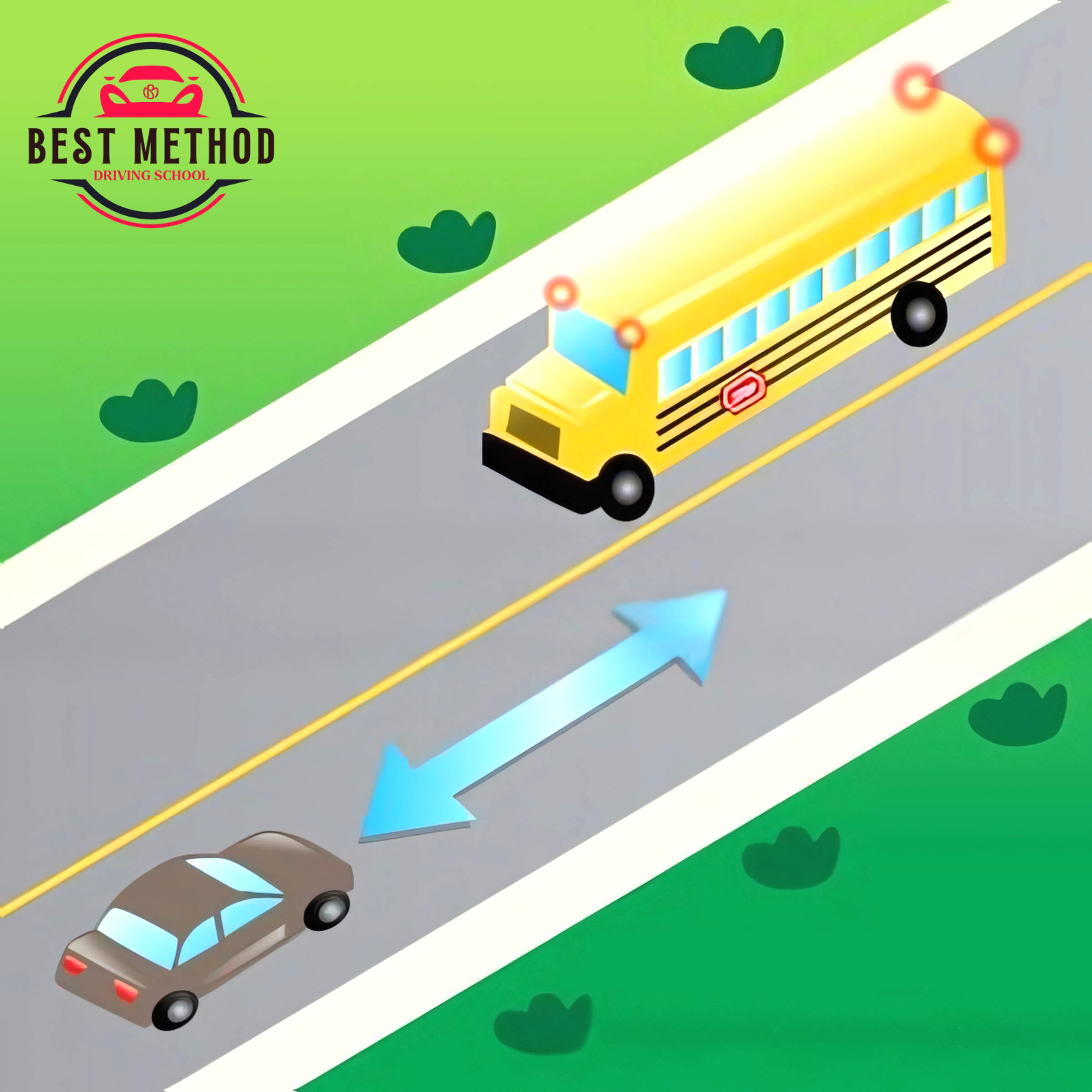
A school bus with flashing red signal lights is stopped on a highway with no median strip. What does the law require drivers to do?
School buses that are stopped with their red lights flashing are either taking on or letting off passengers. In most cases these passengers will be children travelling to or from school. These children may need to cross the highway, and are supposed to do so in front of the bus while the bus driver waits with the red lights flashing, which is why it is the law that other drivers on the road must stop. Children can be excited or distracted, and may not be aware of other traffic on the road, so drivers must stop and permit children to cross the roadway safely. Failing to stop for a school bus that has its red lights flashing is illegal. Drivers who don't stop can be fined $400 to $2,000 and get six demerit points for a first offence.
When approaching a railway crossing where an electrical or mechanical signal device is warning of an approaching train, drivers must:
Drivers must use caution around railway crossings. Trains can travel at high speeds, and are not able to stop suddenly. If a signal device is warning of an approaching train, it is dangerous to attempt to cross the train tracks. Drivers should never attempt to drive under or around railway barriers, even if they do not see a train approaching.
Driver examiners will not issue a pass on a road test if the applicant breaks a traffic law during the test. They also will not issue a pass if the applicant lacks skill or control of the vehicle, has difficulty obeying traffic signals, or drives in an unsafe manner. At the end of each test, the examiner will give applicants a complete report of their skills and explain any mistakes they have made. If drivers fail the test, the report will show them where they need to improve. When they have had more practice, drivers can make an appointment to take the test again. Drivers must wait at least 10 days between tests.
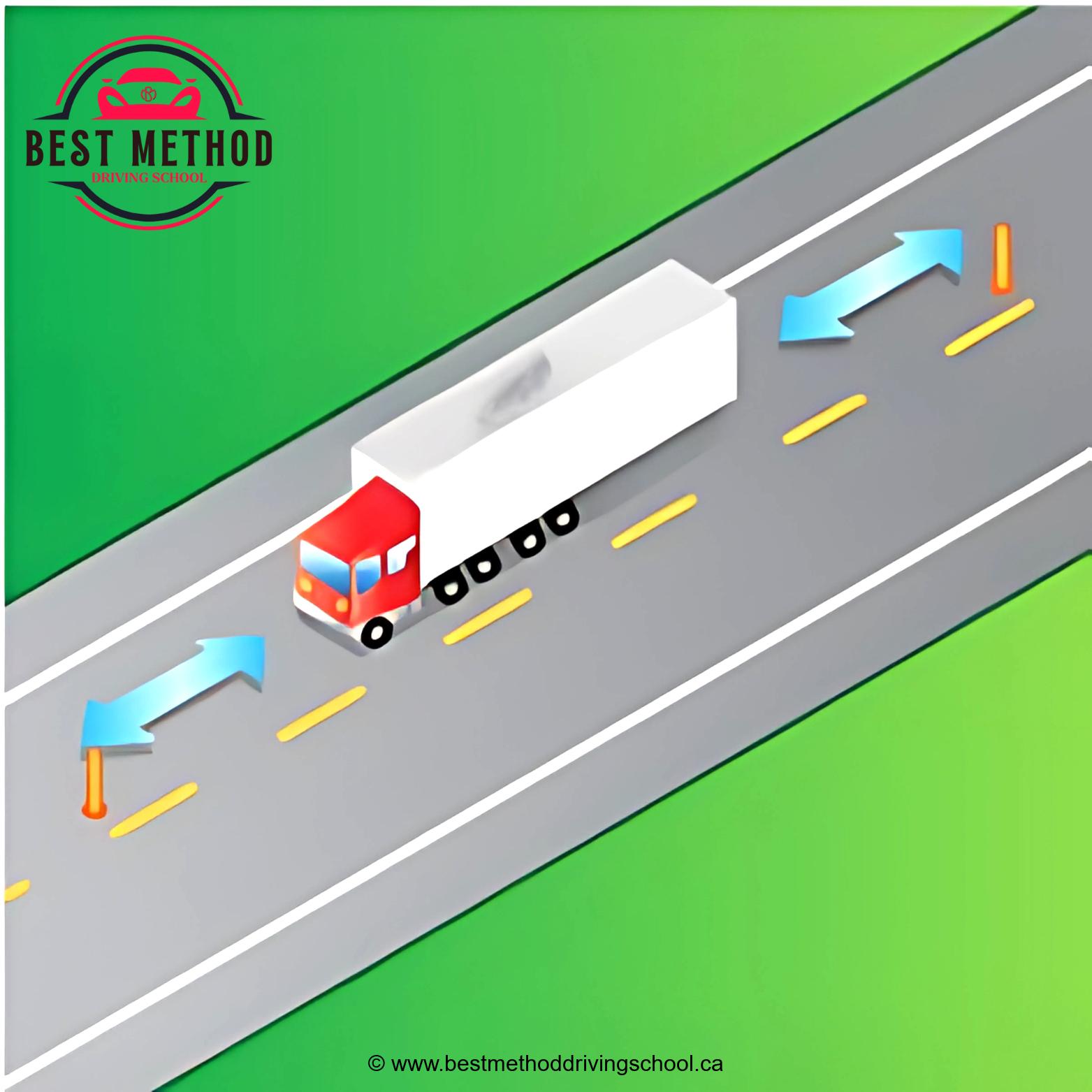
If a commercial vehicle becomes disabled on the highway during a period that lights are required, flares or reflectors must be placed on the front and the rear of vehicle at an approximate distance of...
If a commercial vehicle becomes disabled on the highway during a period that lights are required, flares or reflectors must be placed on the front and the rear of vehicle at an approximate distance of...
Under what circumstances could drivers lose their license?
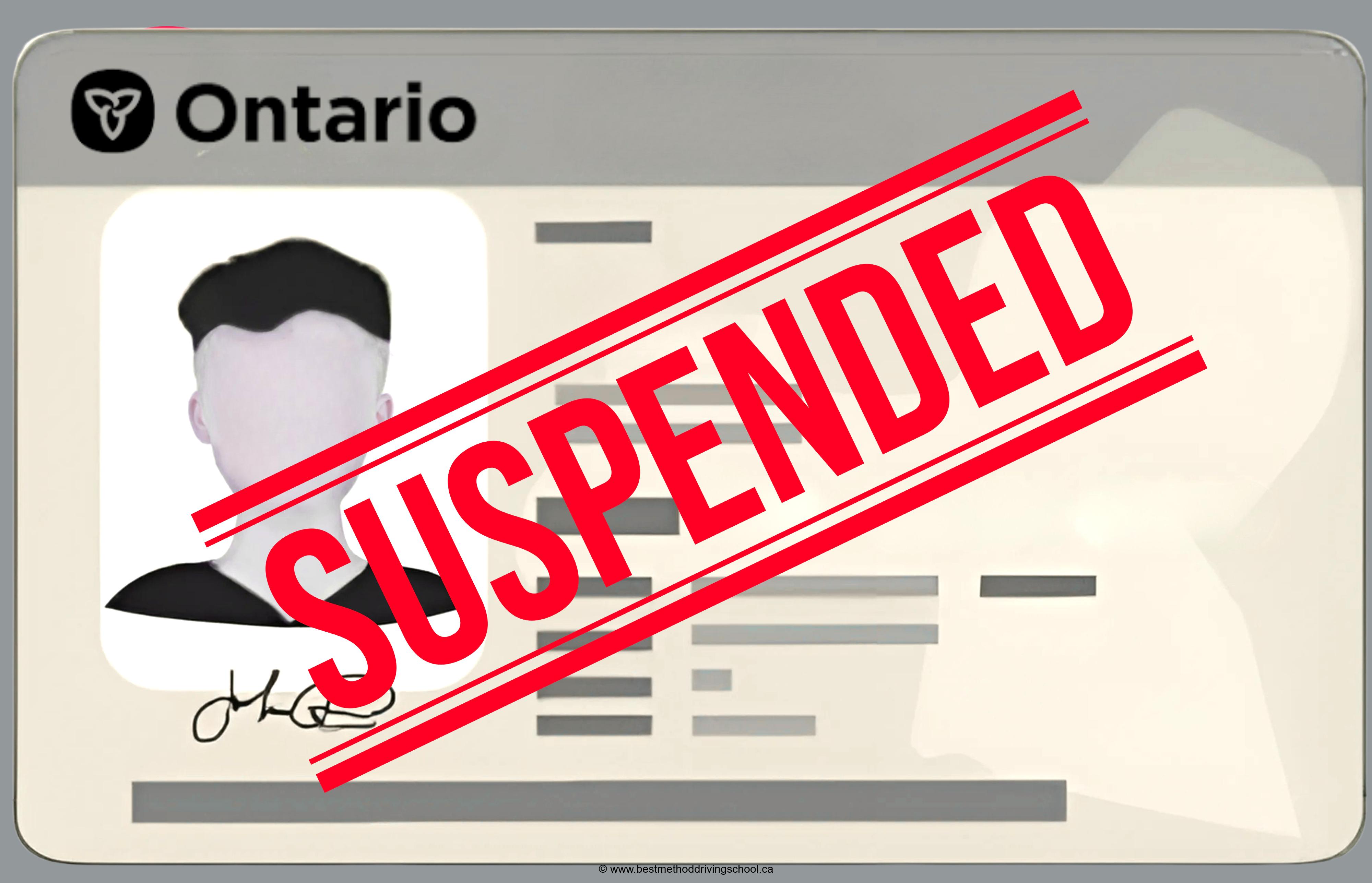
Drivers must not operate a motor vehicle while their license is under suspension. To reinstate their license, drivers must go to a Service Ontario location and pay a fine of $150. They may also need to take vision and road tests.
How much time do drivers have to inform the Ministry of Transportation of any change of name or address?
The Ministry of Transportation requires up-to-date information on all drivers at all times for many reasons, so drivers are required by law to inform the MTO of any changes to names or addresses within 6 days.
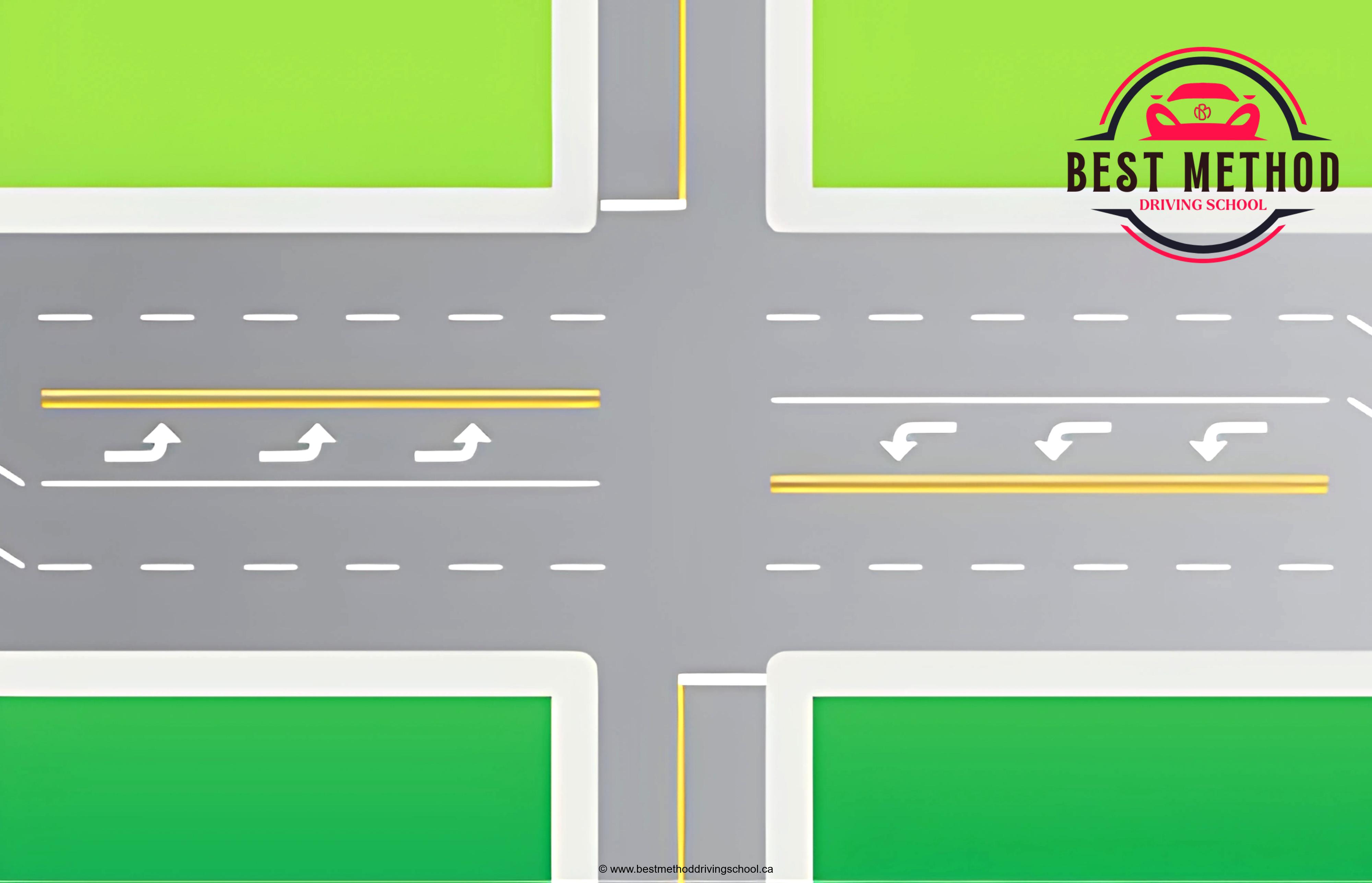
Solid lines to the left of a lane are put there because MTO has determined that it is unsafe to pass along that section of the roadway. Drivers must not attempt to pass other vehicles when there is a solid line to the left of their lane, regardless of whether the line is white (marking another lane of traffic travelling in the same direction) or yellow (marking a lane of oncoming traffic). They should wait until a broken line (white or yellow) occurs to their left, determine if it is safe to pass, then do so properly.
The Accessible Parking Permit is issued to individuals. In order to receive this permit, individuals must have a form completed by their doctor; this form is taken to MTO, where an accessible parking permit may be issued. The parking permit is to be used only by the individual for whom it was issued. It is not intended to be used by the individual’s family or friends. It should only be used when the individual is travelling in the vehicle. For example, a wife out shopping must not use her husband’s permit if her husband is at home caring for their children. The permit is for her husband’s use when he is an occupant of the vehicle.
What actions should be taken when a vehicle?s brakes fail?
Drivers should remain calm in this and all emergency situations. If the brakes fail, drivers should pump the brakes rapidly, as this may prompt the brakes to begin working again. Shifting into a lower gear will help slow the vehicle because this causes the engine to work harder. Drivers should be careful not to accelerate in this situation, something that could easily happen if they panic and act without thinking.
By law, drivers must report a collision to the police when a person sustains injuries, or when there is damage to vehicles or other property exceeding:
Failure to report a collision when required by law will result in a fine of $200-$1,000, three demerit points, a possible jail term, and suspension of the driver's license.
In good weather, what is the minimum following distance drivers should maintain between their vehicle and a?motorcycle?in front of them?
Motorcycles are harder to see because of their size. Drivers of these vehicles may make sudden moves because of uneven road surfaces or debris on the roadway. Because they are less protected, drivers of motorcycles are more likely to be injured in a collision. For these reasons, drivers need to maintain a larger following distance between their vehicle and a motorcycle in front of them. While a safe following distance for cars is 2 seconds, a gap of 3 or more seconds is safest when following a motorcycle.
When approaching an intersection that is blocked with traffic, what should drivers do?
Whenever an intersection is blocked or partially blocked by traffic, drivers must not enter the intersection. Drivers should only enter an intersection when the way is clear and if they are able to travel all the way across the intersection. If a traffic light has turned yellow, and traffic ahead is stopped just at the edge of the intersection, drivers must not enter the intersection, since they will not be able to clear the intersection immediately, and will block traffic.
The best way to stop quickly on wet or icy roadways is to:
When drivers need to stop quickly on wet or icy roadways, the safest method to use is threshold braking, which involves braking until just before the wheels begin to lock, then releasing and reapplying the brakes as needed until the vehicle comes to a stop. Newer vehicles equipped with ABS braking systems do this work for drivers, making a thudding noise, and a jerking sensation which can be somewhat disconcerting the first or second time it occurs. Drivers should familiarize themselves with their vehicles and understand how to brake effectively in case of an emergency.
A traffic signal with a red light and a green arrow indicates:
In many cases, traffic lights can be adjusted to help regulate the flow of traffic during rush hours. A green arrow pointing left at a traffic signal with a red light is an advanced green, permitting drivers to make left turns (provided the way is clear) before traffic in the opposite direction is permitted to travel through the intersection. A green arrow pointing right indicates that drivers may turn right without stopping, provided the way is clear.
 Our Driving Tests